
These local businesses have acted to reduce their environmental impact. Be inspired by their actions and achievements.
Sustainable business profiles
How an energy audit helped an Elsternwick bar cut costs — without cutting corners
Energy costs are one of the less glamorous realities of running a hospitality business. For most small venues, it's a line item that gets managed as best as possible rather than examined closely. There's always something more urgent to deal with.
For Antique Bar, a family-run lounge and event space on Glen Huntly Road in Elsternwick, that changed when they signed up for Glen Eira Council's free business energy audit program. What they found in the audit report surprised them. And the first change they made cost them nothing at all.
About Antique Bar
Antique Bar has been trading in Elsternwick for three years. With ten staff and a reputation for its vintage atmosphere and late-night hospitality, it's the kind of local venue that gives a neighbourhood its character. Like most small businesses, though, energy management had been more reactive than strategic, trying a few things to manage costs, but without an independent expert view of the full picture.
"We had tried a few different things to help with cost but never sought outside advice," says Boutaina Richardson — co-owner of Antique Bar.
When Glen Eira Council offered a fully funded, independent energy audit to local businesses, Antique Bar decided it was worth finding out what an expert would see. Boutaina says, “Having council support seemed like a great opportunity to get a better understanding of our energy use and costs.”
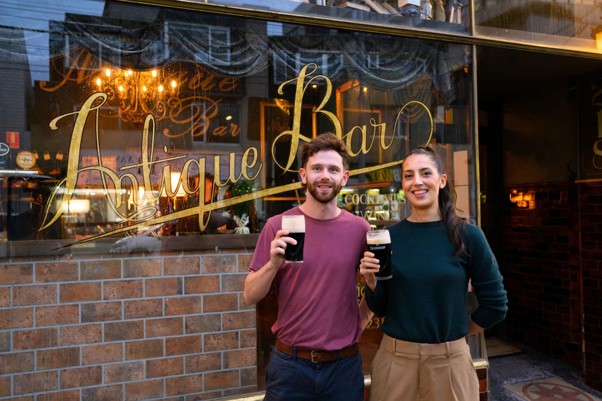
“Having council support seemed like a great opportunity to get a better understanding of our energy use and costs.” — Boutaina
What the energy audit involved
Glen Eira Council's business energy audit program connects eligible local businesses with independent energy auditors who conduct a thorough, on-site review of the business — at no cost to the business owner. For Antique Bar, that meant a qualified auditor from Green Moves visiting the venue and reviewing everything: electricity and gas tariffs, all refrigeration equipment, heating and cooling systems, hot water, lighting, the building structure, and the potential for solar energy.
The business received a detailed written report with clear, practical recommendations including estimated costs to implement and projected savings for each action.
When asked how they found the energy audit process, Boutaina says, "It was very easy, and helpful — a great report to look through."
What the energy audit found
The audit identified potential energy savings of around 38% on Antique Bar's annual energy bills. Several of those savings required no upfront investment at all.
The tariff — the biggest opportunity, and the simplest
The largest single saving identified had nothing to do with new equipment. It was the electricity tariff. The venue was on rates significantly above what was available in the current market. Switching to a more competitive provider could save the business substantially every year — a change that requires no capital, just a phone call. The gas tariff offered a similar opportunity: a better plan was available with their existing provider, or from an alternative supplier.
It's a finding that comes up regularly in energy audits: businesses often stay on outdated rates simply because no one has checked recently. Rates can change in January and July each year, and the audit recommends reviewing tariffs twice yearly to stay on the best available deal.
Refrigeration — a major energy user worth examining
For a bar venue, refrigeration runs constantly — cold rooms, bar fridges, ice machines — and it accounts for a large portion of total energy use. The audit found a number of opportunities across Antique Bar's refrigeration equipment:
- Upgrading seals that weren't sealing effectively on multiple units
- Refrigeration equipment identified as running inefficiently or drawing unnecessary power
- Refrigeration equipment operating in suboptimal conditions, affecting efficiency
Fixing these, many of them low or no cost, reduces energy use and extends the life of the equipment.
Building, lighting and beyond
The audit also identified opportunities in the building shell:
- draughtproofing
- roof insulation
- lighting upgrades (the few remaining halogen downlights are worth replacing with warm-white LED equivalents), plus;
- longer-term potential for rooftop solar - particularly beneficial given the refrigeration load on the site
The surprise
When asked if there were any unexpected findings, Boutaina said she was surprised about the cost-saving opportunities identified in the report. That's a common response from business owners who go through the energy audit process. The scale of what's available — particularly through no-cost tariff changes — tends to come as an eye-opener. When a significant portion of your potential savings requires no capital at all, it changes how you think about energy costs going forward.
What Antique Bar did next
Antique Bar moved quickly on the tariff recommendation and switched energy providers.
It's one of the simplest actions a business can take, and one of the highest-return. The saving begins with the next bill and continues every quarter. And with the detailed report in hand, the business has a clear, prioritised list of what to work through next.
For Boutaina, this is just the beginning. She says, "We are looking at other opportunities and will look at our energy again in the coming months."
That kind of ongoing attention, using the audit as a starting point rather than a one-time exercise, is exactly what the program is designed to encourage.
Could your Glen Eira business benefit from a free energy audit?
Glen Eira Council's Business Energy Audit program offers eligible local businesses a fully funded, independent review of their energy use and costs. You receive a detailed written report with practical recommendations, estimated savings, and guidance on available grants and support programs - including the Victorian Government's Business Energy Savers program and Solar Savers initiative.
Availability is limited. To find out if your business is eligible or to register your interest, contact the Glen Eira Council sustainability team at sustainablebusiness@gleneira.vic.gov.au

How a fully funded energy audit helped one of Elsternwick's most loved businesses take control of energy costs
Glo Health has been part of the Elsternwick community for 15 years. Founded by naturopath Adam Pincus, the health food store, organic grocery, and wellness clinic on Glen Huntly Road is home to 16 staff and over 7,000 products. Like any business with significant refrigeration, it carries a substantial energy bill.
Energy costs had always been something Adam kept a close eye on as a significant business expense. The council-funded audit offered something a standard rate review couldn’t - a fully independent picture of the entire site - so he decided to find out what an expert eye would actually see. The answer, it turned out, was quite a lot.
Adam credits this council initiative to have started this whole process.
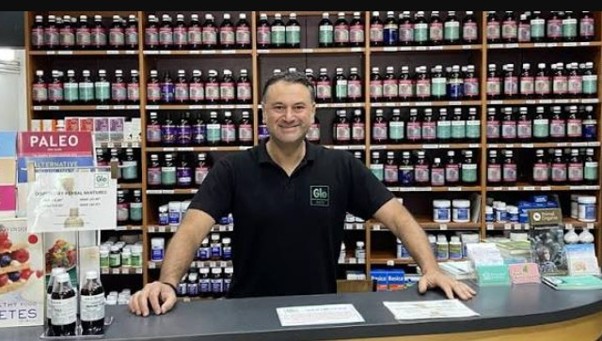
"We changed to new providers for gas and electricity with better rates." — Adam
What the fully funded audit involved
Glen Eira Council's Business Energy Audit program connects eligible local businesses with independent, qualified energy auditors who conduct a thorough on-site review at no cost to the business. For Glo Health, that meant a Green Moves auditor spending time in the store, reviewing everything: electricity and gas tariffs across both meters, all refrigeration units, heating and cooling, hot water, lighting, the building shell, and the potential for rooftop solar.
The business received a detailed written report, with roughly costed recommendations and projected savings for every action identified. Adam found the whole energy audit process to be positive, saying it was very easy to establish and valuable, with comprehensive feedback received.
What the audit found: around 33% in potential savings
The audit identified potential energy savings of approximately 33% on Glo Health's annual energy bills. This is a meaningful reduction for any business, and one that includes several actions with zero upfront cost.
Here's a summary of what was found across the key areas of the business.
Refrigeration — the dominant energy user
For a health food and grocery store, refrigeration is everything. It accounts for around 61% of Glo Health's total daily energy use: cold rooms, glass-door fridges and freezers, and two large open-display units for fresh produce and deli lines.
The audit identified the open-display units as the highest-priority opportunity on the site. Open refrigeration (the kind without doors) uses significantly more energy than equivalent door units, because it's constantly fighting the ambient temperature of the store. The audit recommended replacing both open units with energy-efficient door alternatives as a priority investment, projecting substantial long-term energy savings from doing so.
Tariffs — immediate savings, no cost
Across both electricity meters and both gas meters, Glo Health was paying above the best available market rate. The audit identified better options across all four, and Adam moved quickly, "We changed to new providers for gas and electricity with better rates."
For any business, energy tariffs are worth checking at least twice a year — rates change in January and July. The federal government's Energy Made Easy comparison tool makes it easy to compare options at any time.
Gas infrastructure — a case for going fully electric
Both gas meters at Glo Health are used solely for hot water through two ageing systems. The audit found that supply charges were accounting for a disproportionately large share of the total gas cost relative to actual gas use.
The recommendation: replace both units with efficient electric alternatives and disconnect the gas meters entirely, eliminating the ongoing supply charges.
Victorian Government rebates are available for heat pump hot water systems through the Victorian Energy Upgrades program, which can significantly reduce the upfront cost of making the switch.
Building shell, heating and cooling
The building has a number of draught points. The audit recommended practical fixes: draughtproofing doors and vents, sealing gaps and using ceiling fans in combination with reverse cycle units for better efficiency.
Heating and cooling accounts for around 28% of daily energy use, so getting the basics right makes a consistent difference.
Solar: a strong candidate
With a recently replaced roof and a refrigeration-heavy energy profile, Glo Health is a strong candidate for rooftop solar. The audit recommended installing solar on the main meter site, noting that for retail businesses with significant daytime refrigeration loads, solar can deliver particularly strong returns.
Glen Eira businesses can access rooftop solar through the council's Solar Savers program, which provides access to quality installation at competitive prices along with government rebates and loans. Adam is currently considering the solar option.
The verdict
On completing the energy audit, Adam felt that there were many wins from the whole process, particularly the comprehensiveness of the report and the practicality of the suggested solutions. He says he would definitely recommend it to other local businesses and is looking forward to getting stuck into implementing the recommendations from the report.
For a business that was already paying attention to energy costs, the audit filled in significant gaps: quantifying the opportunity, prioritising the actions, and giving Adam a clear, independent picture of exactly where Glo Health's energy spend was going and what could be done about it.
The tariff changes are already done. The refrigeration roadmap is in place. The gas transition is planned. And with potential savings of around 33% on the table, the audit has more than earned its place in Glo Health's business planning.
Is your Glen Eira business eligible for a fully funded energy audit?
Glen Eira Council's Business Energy Audit program offers eligible local businesses a fully funded, independent on-site energy review - covering tariffs, equipment, building shell, and renewable energy opportunities. You receive a detailed written report with practical, costed recommendations and guidance on available grants and support.
Once you have your audit, Glen Eira's Business Energy Savers program can connect you with accredited suppliers to help implement upgrades and access Victorian Government subsidies — and the Solar Savers program can help if solar is on your radar.

Availability is limited. To find out if your business is eligible or to register your interest, contact the Glen Eira Council sustainability team at sustainablebusiness@gleneira.vic.gov.au
Emmy Monash Aged Care
Emmy Monash Aged Care participated in a free energy audit program that we offered to ten local businesses. They were looking to reduce operating costs and identify energy efficiencies that could be applied.
The aim of the audit was to identify the primary users of energy and to provide recommendations that make the most business sense to reduce the energy usage and costs within a reasonable payback period.
They wanted to identify the key energy users within the complex, propose suitable recommendations on how to reduce energy usage and provide a cost benefit analysis including estimated implementation costs, payback periods, cost savings and expected greenhouse gas savings.
The result of the audit
This energy assessment has identified that there is scope to reduce the energy usage of Emmy Monash Aged Care by approximately 37 per cent, which is equivalent to an approximately $104,500 pa reduction in energy costs. This equates to savings of over $1.4 million over 10 years.
Changes included:
- changing Halogen lighting to LED
- conducting an air conditioning review
Savings could be achieved by applying a combination of energy reduction strategies. They are a combination of tariff savings and energy use savings.
With the help of our energy audit program, Emmy Monash Aged Care is on track to change the way they use energy and upgrade their inefficient infrastructure to make cost savings in the long term.
"Thank you for your initiative and providing us the services of eco decisions at no cost. Graeme spent time visiting the site few times, diligently went about assessing equipment we got. He has analysed electricity usage for both sites and given us a clear picture of what we need to look at in terms of saving some dollars. We are pleased, we received energy audit report and recommendations at no cost. We appreciate his service and highly value it.”
Indy, Engineering manager, Emmy Monash Aged Care
The Knight
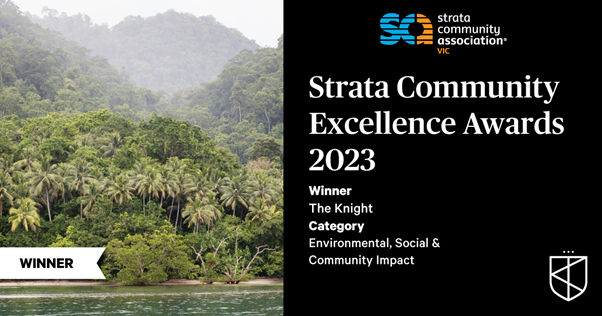
The Knight is an Owners Corporation, Strata and Body Corporate management company with an office in Caulfield North. In 2021 they achieved Climate Active Certification as a carbon neutral organisation, becoming the first Owners Corporation Management company to do so. They were also named the winner of the 2023 Strata Community Excellence Awards’ Environmental, Social and Community Impact Award.
Sustainability highlights
The Knight has reduced their environmental impact through the following achievements and actions:
- Achieved a Climate Active carbon neutral certification in 2021.
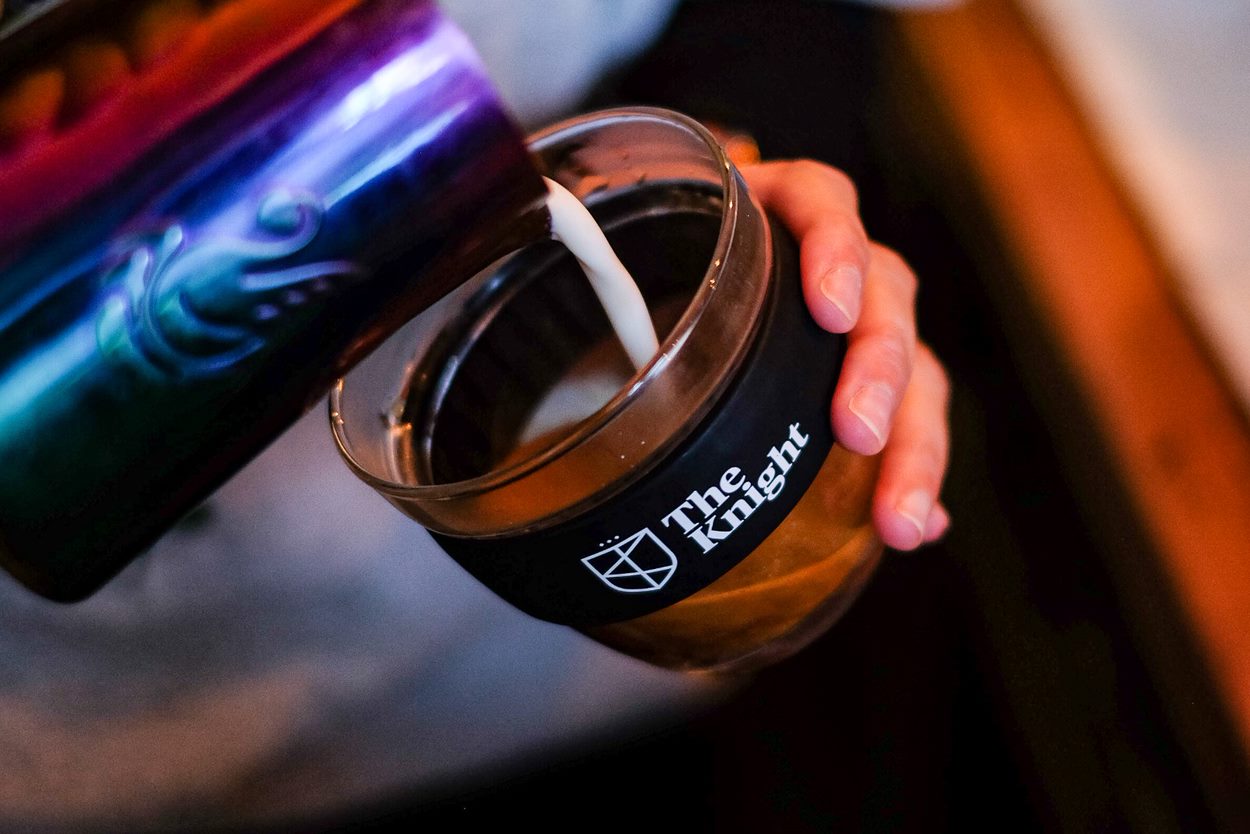
- Provided all staff with reusable coffee cups.
- Recycling of soft plastics in a small bin saving about one bag of soft plastic from landfill a week.
“Going carbon neutral for us was a way to lead by example and demonstrate to our industry colleagues and clients that sustainable strata is an option.” - taken from Climate Active
- Set up of e-waste bin for office equipment and broken fobs/remotes for their properties that is regularly dropped off at Officeworks
- Replaced paper business cards with Tapt cards
- Established an internal sustainability committee that meets monthly to discuss improvements internally and for clients
- Staff education through sustainability updates at regular meetings
- Ran an internal sustainability competition
- Moving to GreenPower in the Caulfield office, supporting renewable energy and reducing emissions
- Implemented an environmental and social policy
- Recycling all toner/printer cartridges and using recycled paper
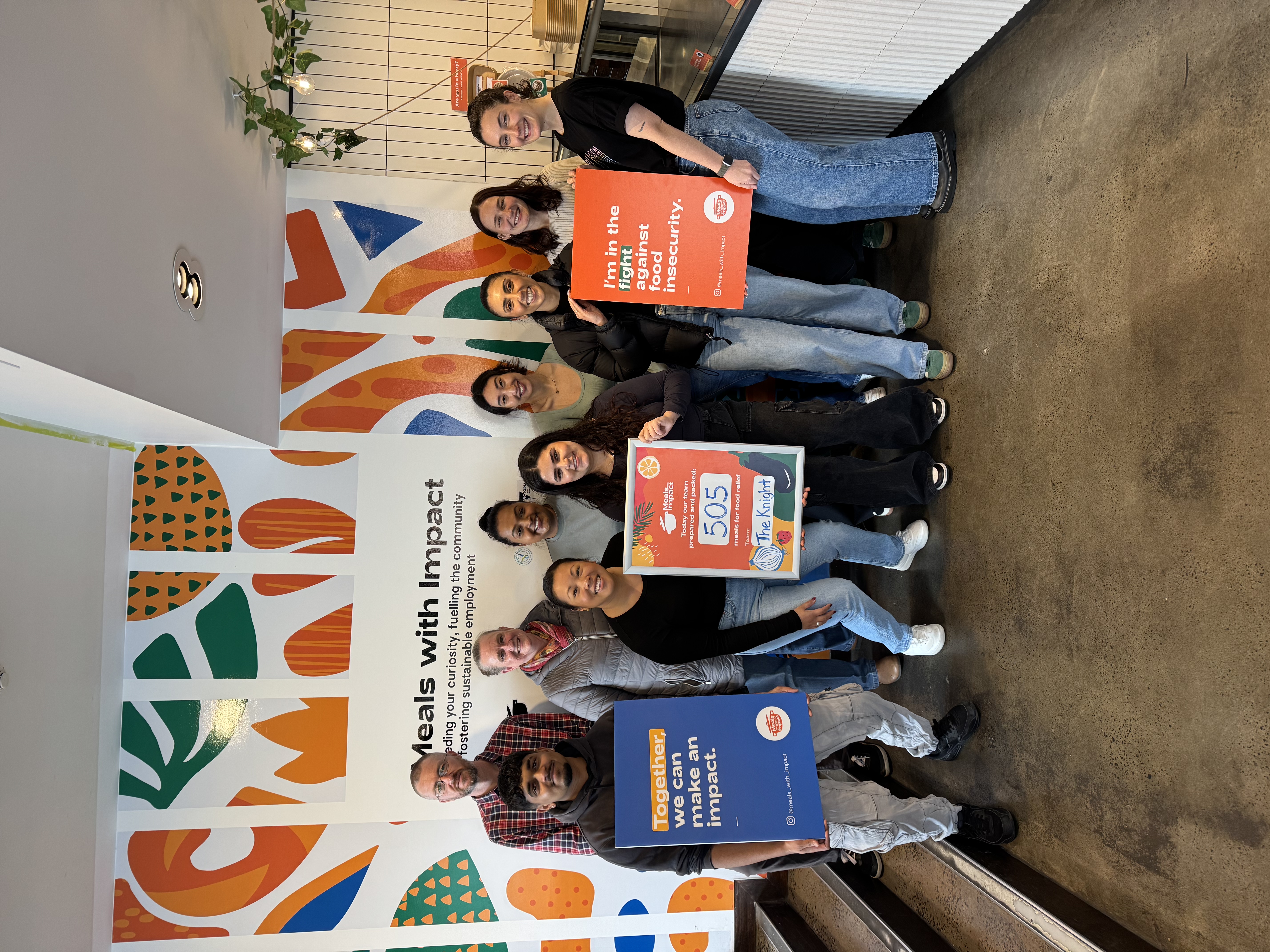
- Banned use plastics at social events and appointment of a food officer to minimise food waste
- Won the Strata Peak Body SCA award for Strata Community Environmental & Engagement in 2021
- Regular education including webinars for clients on sustainability
- Assisting clients by creating a list of suppliers that have a sustainable focus
- Assisting clients with sustainable retrofits
- Currently a partner in Unlocking Sustainable Strata with Hip V Hype
- Food waste is recycled in the office compost bin which saves it from landfill or given away via the ShareWaste app
What advice would The Knight give to businesses on becoming more sustainable?
“Engage your staff first. This is the most important step. We give regular updates at our staff meetings on sustainability, have run a sustainability competition and include our sustainable initiatives in inductions. It ensures all our staff are onboard and aware of what we are doing.” — Alex Smale, Training and Sustainability Manager.
Oasis
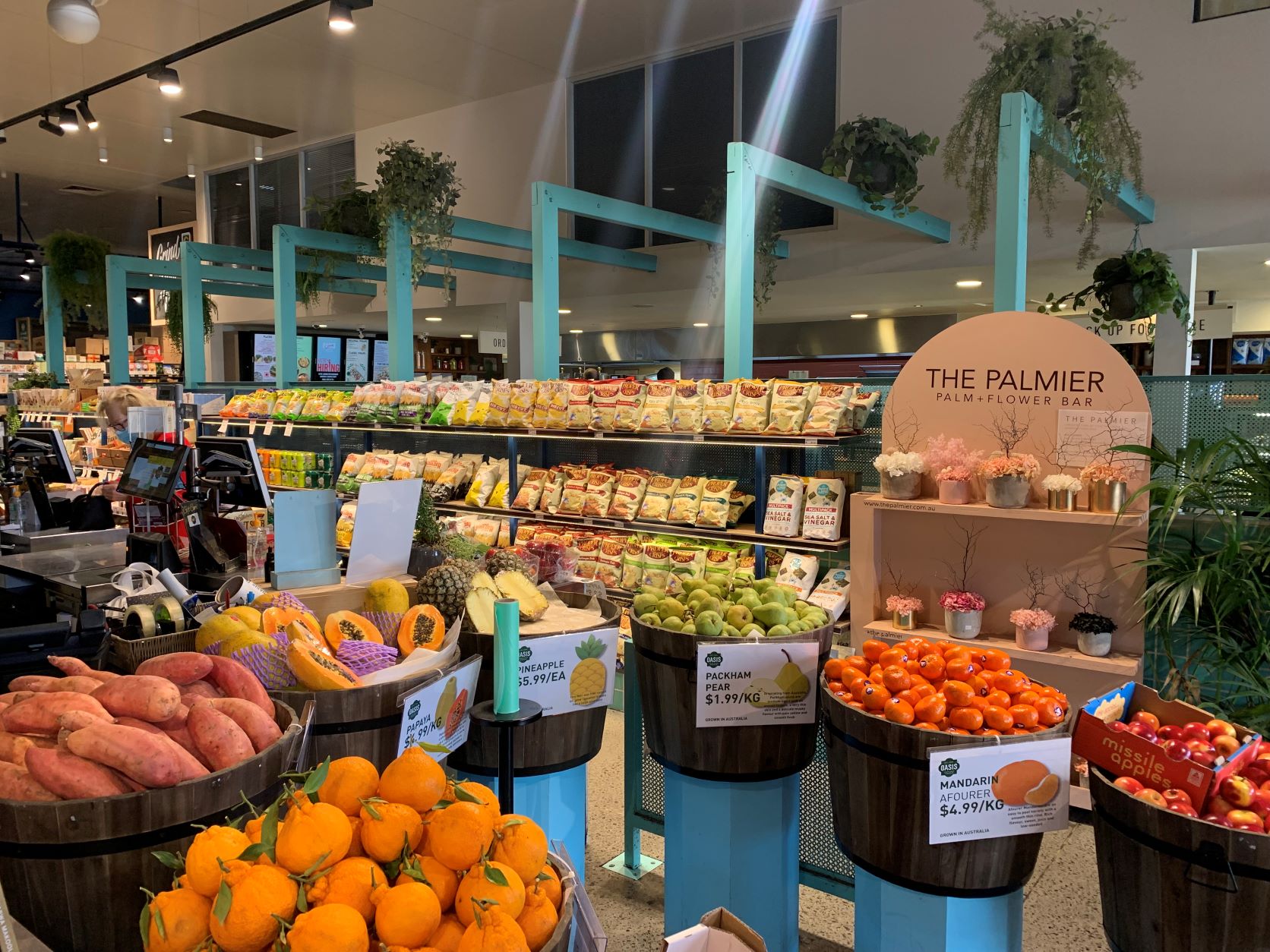
Oasis Murrumbeena is home to a bustling café, a gourmet grocery store, a deli of epicurean proportions, a fresh food market and popular cooking school. Since 1998, this family business has been sharing authentic food from around the world with fellow food lovers and are also committed to reducing the environmental impact of their business.
Sustainability highlights
Oasis has reduced their environmental impact through the following achievements and actions:
- Their own initiative — OASIS | loop helps reduce the amount of materials going to landfill by using packaging that can be refilled or reused and ultimately recycled at home or at the store.
- Guides on various products in-store, letting you know that you can refill the original container that came with the product from the Oasis bulk foods department.
- In-store soft plastic collection partnership with Reground. Plastic collected gets sent to Close The Loop where it’s combined with recycled glass and toner from waste ink cartridges to make a material that replaces bitumen in asphalt production, giving materials a chance at a second life.
“Sometimes the simplest things have the biggest impact. We divert as much food from landfill by collecting it and giving it to our mother so she can feed her flock of chickens.”
- Coffee grounds are collected and given to community gardens, local gardeners, Melbourne Zoo and other enterprises to make compost.
- Moving away from single-use plastics by:
- Transitioning to bio-degradable materials — mostly sugarcane pulp, paper, cardboard and PLA. Estimated reduction of 500kg of plastic per year.
- Eliminating plastic drink packaging and moving to glass and aluminium packaging. Estimated reduction of 60,000 plastic bottles or about 1,500kg of plastic per year.
- Transitioning to cardboard packaging for pre-packed boxes of desserts. Estimated reduction of 1,200kg of plastic per year.
- Transitioning to glass packaging for chai and tea range. Estimated reduction of 200kg of plastic per year.
- Changing to a fully recyclable material in stand-up pouches. Estimated reduction of 2,000kg of plastic per year.
- Changing to refillable spice shakers that use 11% less plastic than the tubes before. Estimated reduction of 200kg of plastic per year.
- Divert as much food from landfill by collecting it and giving it to their mother so she can feed her flock of chickens.
- Leftover bread is donated to charitable organisations.
- Food scraps are supplied to farmers who feed their livestock and pet food manufacturers who incorporate them into pet food.
- An estimated 10,000 litres of waste oil from fryers is recycled into biodiesel that’s mostly used to operate farm machinery to produce more oil.
- Installation of a state-of-the-art combined refrigeration and air-conditioning system in the Fairfield store which uses a natural refrigerant — carbon dioxide gas, for its operation. This system will avoid the emission of 2,000 tonnes of CO2-equivalent gas over its twenty-year lifespan.
- Heat is reclaimed from the refrigeration system and used to heat the shop in winter and dehumidify it in summer. This results in a net reduction in greenhouse gas emissions of 500 tonnes of CO2-equivalent gas over its twenty-year lifespan.
- Installation of a new heating system at the Murrumbeena store that will avoid the emission of 1,000 tonnes of CO2-equivalent gas over its twenty-year lifespan.
Mr Burch
Located in McKinnon village, Mr Burch has a friendly and homely atmosphere and offers classic breakfast and lunch items seven days a week. Sustainability and supporting local creatives are at the heart of this business. Mr Burch reduces their carbon footprint by recycling, composting and striving towards zero waste.
"We really want people to avoid wastage like paper cups and plastic lids. Coffee and drinks also stay hot for longer in reusable cups.”
Sustainability highlights
Mr Burch has reduced their environmental impact through the following achievements and actions:
- Coffee waste goes to compost
- Separate recycling stream for recyclable products
- Plastic milk bottles are taken back by their supplier
- Cooking oil is collected for second life, and not into landfill
- Customers are encouraged to BYO keep cups
- 20c discount for BYO cups
- Paper takeaway cups are an extra 20c surcharge
- This saves an average of 20 coffee cups a day from going to landfill
- Customers are encouraged to bring their own take away containers
- Paper containers and paper bags are only provided for take away
- Only glass bottled drinks are sold
- Used milk cartoons are cut out and made into coffee cup holder trays for take away coffee
- Organic waste goes to their compost bin or to home compost
- Single-use plastics are banned
- Local produce and local suppliers are used (cakes, raw materials, milk, vegetables)
- Blankets are provided outside instead of turning on the heater
- LED lights in the shop
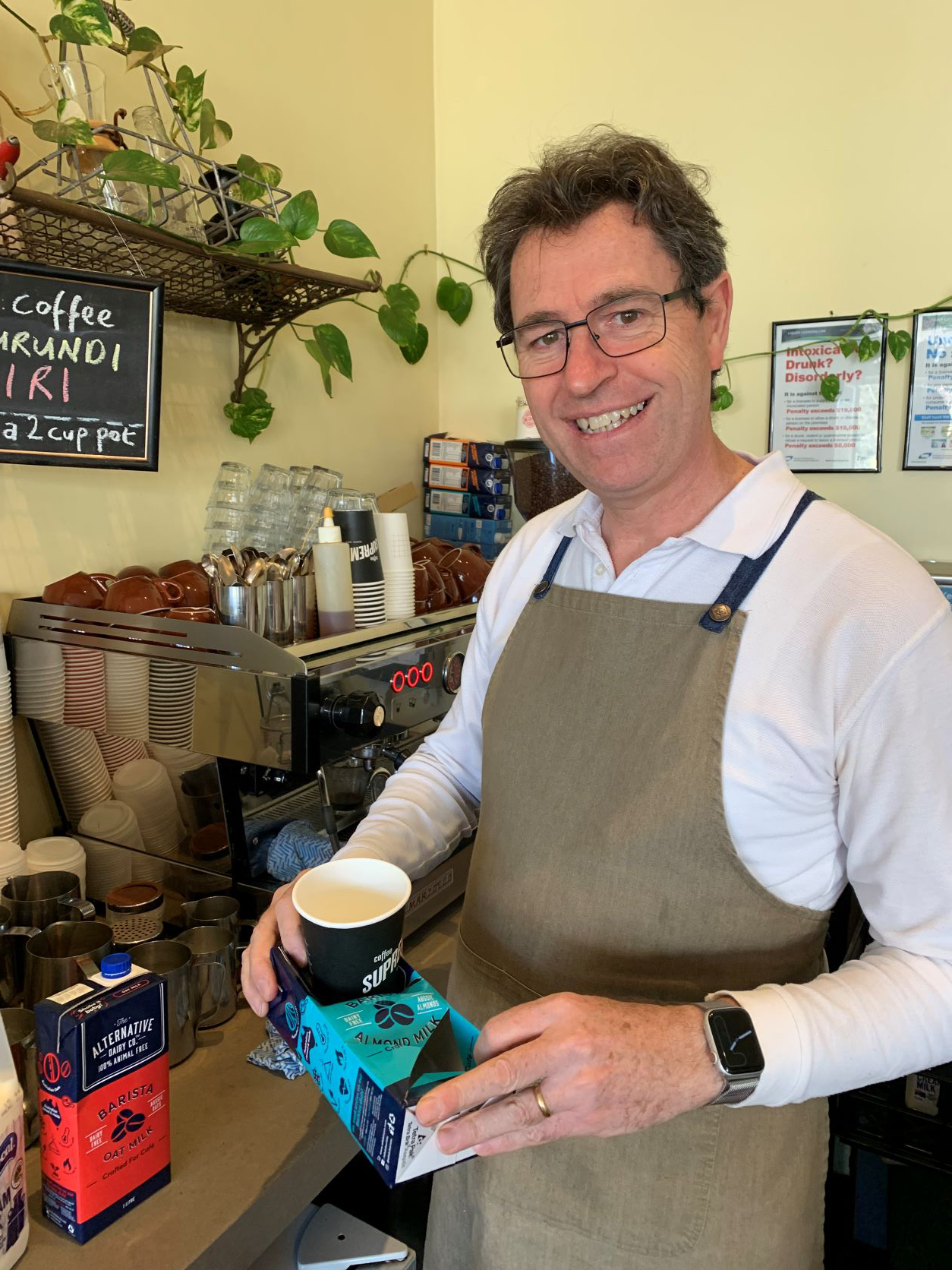
What advice would you give to businesses on becoming more sustainable?
“Pay attention to what you throw away, start by strictly separating the recycling, organic and general waste. Can any of the items in the recycling bin be re-used or redirected, as we’ve done for milk bottles? How can you keep the general waste to an absolute minimum?
Customers do notice and really love to see the effort you make to be sustainable.
You can potentially save some money by reusing, for example reuse carrier trays and use less ‘one use’ takeaway cups.”
Chevra Honey
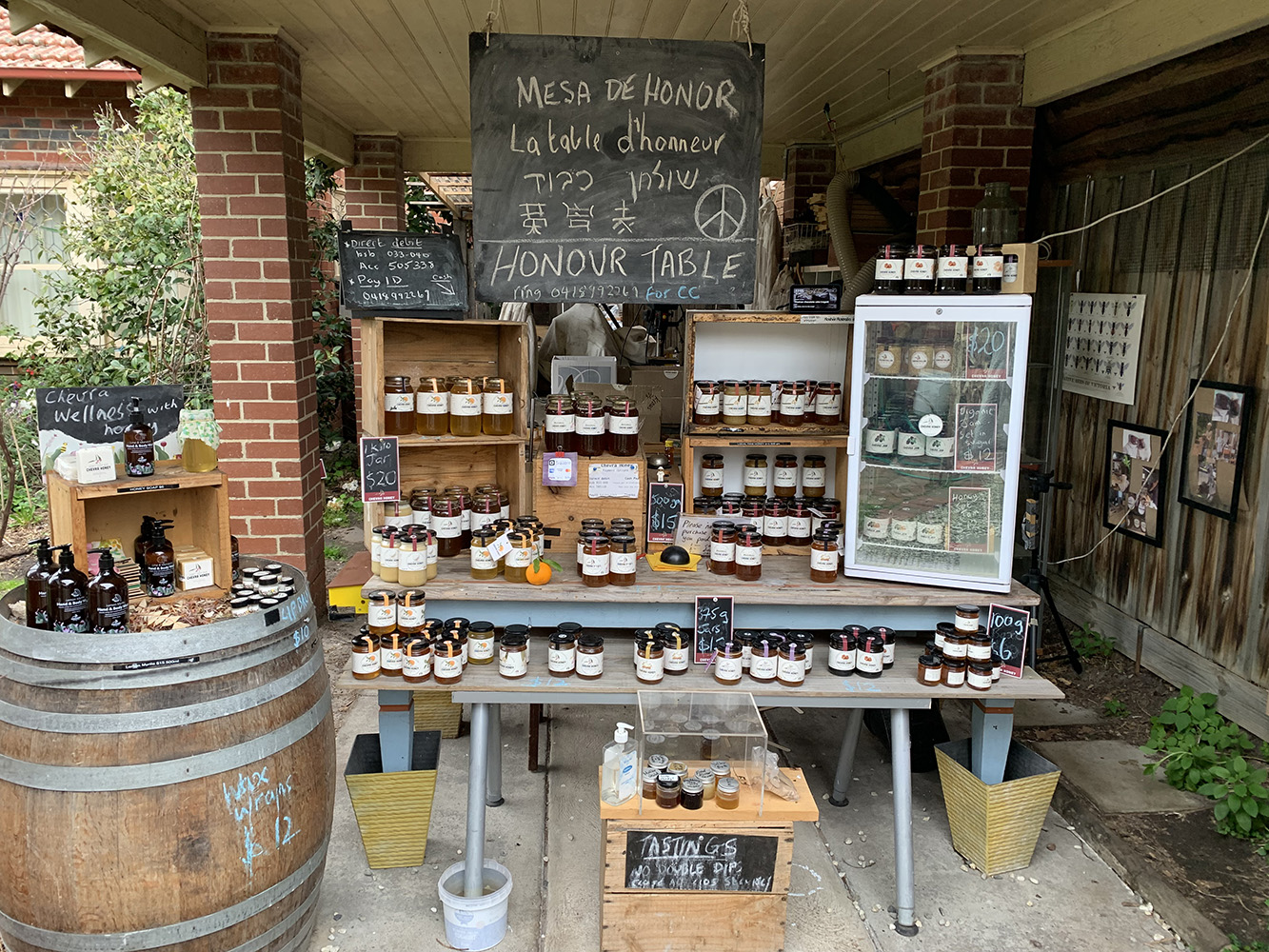
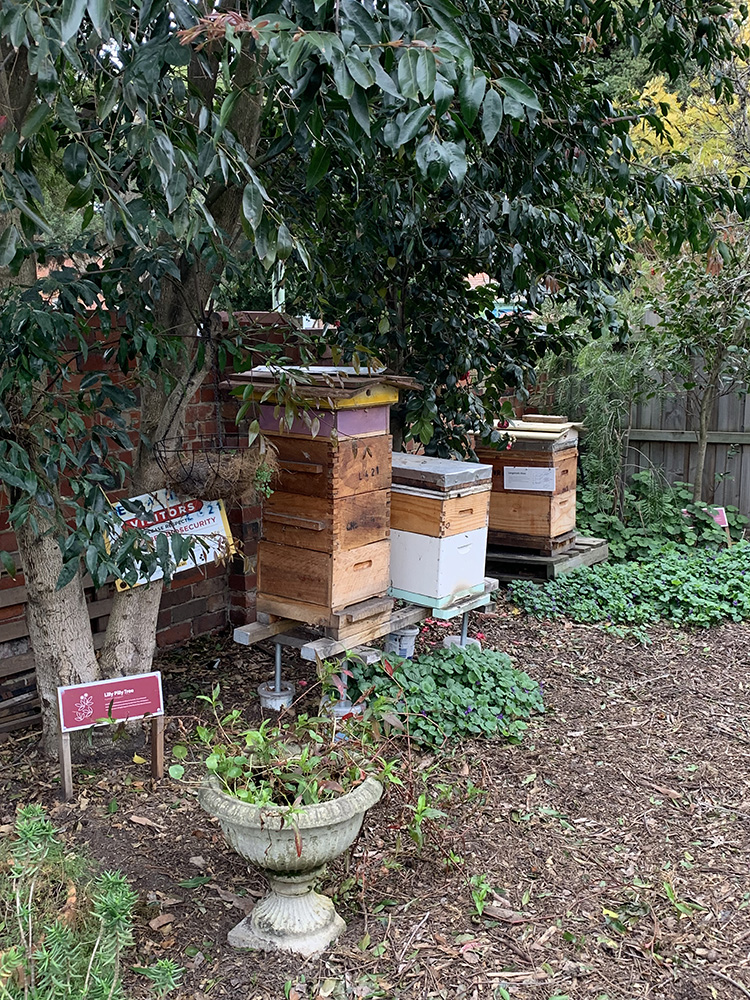
Chevra Honey began in 2015 when Jonathan Landes and his four lifelong friends embraced the experience of establishing bee colonies in the suburbs. They now have 40 locations throughout Melbourne and run an inner-city farm near Fairfield.
“We want people to know that bees are essential to our environment and food chain.”
They are also starting a new hive in Carnegie, working with the Graceburn Bees Resident Project.
Sustainability highlights
Chevra Honey works with the local community to encourage sustainable beekeeping and provides education around starting and maintaining beehives. They sell honey from their local beehives and have many sustainable practices in place.
- From resident’s gardens to community areas, there are 30 beehives in Glen Eira.
- Working with the Graceburn Bees Resident Project in Glen Eira to set up hives in the laneways.
- Provide education around beehive management, basic beekeeping and the best bee-friendly plants to make your garden more environmentally diverse and attractive to bees.
- Honey is locally produced, from the hives in Glen Eira and jarred at their workshop. All honey is locally produced, harvested and jarred.
- The ‘farm gate shop’ sells local kosher honey and beekeeping products. They also have an observation hive and chickens — the community is free to come and visit and learn more about local beekeeping.
- Natives are planted in their garden, and they encourage the community to plant along their nature strip to provide a corridor for the bees to the hives. This also encourages insects and birds, which are important for the environment.
- Chevra Honey will go out to homes interested in starting a beehive and consider the suitability from all aspects — from the garden itself to neighbours, pets and kids as well.
- Encouraging good hive management to minimise swarming.
- Using recycled water.
What advice would you give to businesses on becoming more sustainable?
“People have to reach out and care about our local environment. You can connect with people and make friends. It’s good for the urban environment, the community, and it is good personally.”
Want to make your business more sustainable?
If you have any enquiries about making your business more sustainable email us at Sustainablebusiness@gleneira.vic.gov.au or read more about sustainable business.
